Virtual Try-On & AR: The Engagement Layer Brands Have Been Looking For
Static product photos sell once. AR try-on changes the math entirely. When a shopper sees a garment on their own body, in their own room, the conversation shifts from "is this right for me?" to "where does this fit in my wardrobe?" Engagement, conversion, and loyalty all bend in the brand's favor.
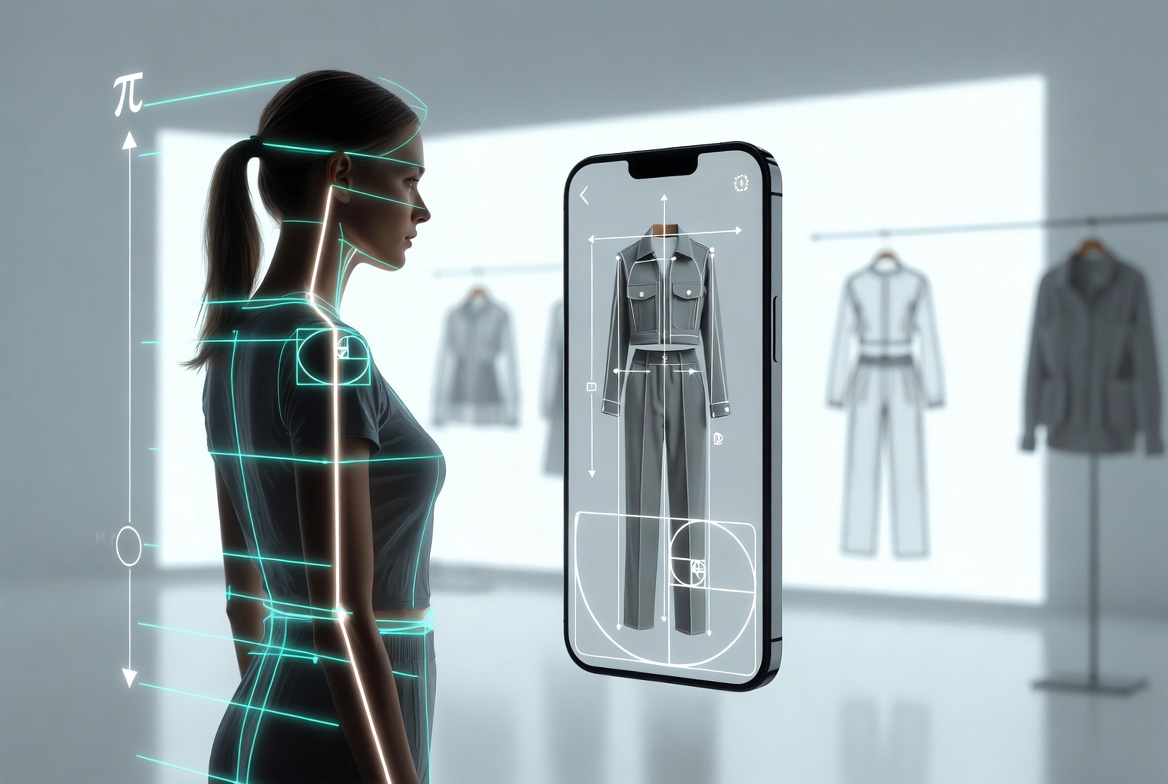
Photos are flat. Bodies are not.
For two decades, the standard product page has been a still photo on a model who is not the shopper. Brands have tried to compensate with bigger images, more angles, model-fit notes, and the occasional video on a loop. None of it answers the question the shopper actually has, which is whether the garment will look right on the body in front of the screen.
That gap is what's funding the returns crisis. It is also why apparel ecommerce has the highest cart-abandonment rate of any category. Shoppers stall at checkout because they cannot picture themselves in the garment. The result is a long, expensive retail loop: order, receive, try on at home, return, refund, restock.
What AR was supposed to be, and why it mostly hasn't been
Augmented reality try-on has been promised for almost a decade. Beauty got there first because the surface area is small and the math is forgiving. A lipstick on a face is plausible at a distance. Apparel is harder. Drape, stretch, posture, and proportion all conspire to make a "try-on" feel uncanny when it is built on a generic avatar that approximates the shopper rather than represents them.
Most try-on tools today fall into one of two camps: a static avatar that looks nothing like the user, or a webcam-based overlay that wobbles and warps in motion. Both fail the credibility test that drives the engagement metric. If the shopper does not believe the rendering, the tool stops being a sales aid and becomes a novelty.
The missing piece is the body, expressed as data
AR try-on works when the avatar in the rendering is the person, not an approximation of them. That is what a Biometric ID makes possible. One scan in a VyMetric Totem (240+ measurement points) or with the Mobile Body Scan app (85+ points) produces a portable, validated profile of the shopper's actual body. The same ID can drive size recommendations across brands, and it can drive an AR rendering that is dimensionally faithful.
This is the difference between an avatar that looks like a generic mannequin and a rendering that captures the proportional ratios, posture, and asymmetries of the shopper. The body is no longer guessed at. It is referenced.
Engagement: the metric that compounds
Engagement in apparel ecommerce is not just dwell time on a page. It is the depth of the interaction between shopper and product. Four signals shift measurably when AR try-on is anchored to a real Biometric ID:
Time on product page. Shoppers spend significantly longer on a page when they can manipulate, rotate, and view a garment on themselves. Time on page correlates directly with intent.
Pages per session. A shopper who has a working avatar tries multiple garments. They explore. They build outfits. They cross categories.
Return visits. An avatar tied to the shopper's saved Biometric ID is a reason to come back. The next visit starts faster and goes deeper.
Social sharing. When a shopper looks good in a try-on, they share it. AR try-on routinely produces the kind of organic, on-brand content that paid social spend is meant to imitate.
These four signals do not just look better in a dashboard. They feed the algorithms that decide what the shopper sees next, the rankings that the brand competes in, and the lifetime value that defines whether the customer is profitable.
Conversion: the cost of hesitation, removed
The single biggest driver of cart abandonment in apparel is uncertainty. The shopper closes the tab not because they have decided no, but because they cannot decide yes. AR try-on, properly grounded in real body data, removes the hesitation by showing the shopper exactly what they are buying, on themselves, before they commit.
A confident size recommendation answers "will it fit?" An AR rendering answers "will it look right?" Both questions get answered before the credit card comes out. Conversion lift is the natural consequence.
Returns: the upstream fix that finally works
Most returns prevention tools target the moment of decision: a clearer size chart, a "what size should I order" widget, a recommendation engine. AR try-on operates upstream of all of them. The shopper does not need a chart because they have already seen the garment on their body.
Returns driven by "looks different than I expected" become rare when the shopper has been allowed to expect correctly. The dollar value of that shift is enormous because every prevented return is a triple savings: the original sale stays booked, the reverse logistics cost disappears, and the restocking labor never happens.
Loyalty: the relationship that survives the next browser tab
Apparel customers do not switch brands because of price. They switch because the experience is forgettable. An AR try-on that lives across brands, anchored to a Biometric ID the shopper owns, creates a relationship the shopper can carry from one merchant to another. It also creates a reason to return.
For a brand, this is a different shape of loyalty than what a punch card or a discount code produces. It is loyalty rooted in a tool the shopper relies on, not a deal they will eventually find somewhere else.
How VyMetric makes the rendering credible
Credible AR try-on is engineering, not marketing. Four things have to be true for the experience to earn the engagement metrics it is supposed to deliver.
For brands: how this plugs in
AR try-on through VyMetric is a SaaS API integration, not a separate product to license, host, and maintain. The same API call that returns a size recommendation can return an AR-ready avatar tied to the shopper's Biometric ID, with permission. The brand renders it on its own product page using its own front-end, with no separate onboarding flow for the shopper.
For the customer, there is no friction. They scan once, anywhere in the network, and try on garments everywhere. For the brand, the cost of entry is low and the upside compounds with every additional brand on the platform, because shoppers bring their saved Biometric ID with them.
How shoppers access try-on
The shopper has two ways into the experience, and both rely on the same underlying Biometric ID:
VyMetric Portal (after login). Once the shopper has scanned and authenticated to their VyMetric account, the Portal becomes their personal try-on space. They can browse participating brands, drop garments onto their avatar, save outfits, track size and fit changes over time, and grant or revoke per-brand access at any time. Login is the gate that unlocks the personalized layer.
VyMetric Mobile App. The same experience travels in the shopper's pocket. The Mobile Body Scan app captures the initial 85+ measurement points and gives the shopper an AR try-on they can use anywhere they shop, including on a brand's site that has integrated the API. No separate sign-up per brand. One identity, one avatar, one consent surface.
Both access paths are authenticated. The shopper is always in control of which brands can read the ID and for how long. The brand never sees raw measurements, only the rendered output and the size recommendation it requested.
The engagement layer was always going to be visual
Apparel commerce has spent twenty years optimizing the last three feet of the funnel: the photography, the size chart, the recommendation widget. The next twenty will be about the missing first step: a faithful representation of the body that everything else can build on.
Virtual try-on is what that body data layer looks like at the surface, the thing the shopper sees and remembers. Underneath, it is a Biometric ID doing the work. Engagement, conversion, returns, and loyalty are not separate problems. They are downstream effects of the same upstream truth: the body is the passport, and the brands that learn to read it will own the next decade of apparel ecommerce.
The body is the passport. We issue the ID.