What Does It Mean to Own Your Own Biometric Data?
We explore what genuine data ownership looks like in practice, not as a legal clause, but as a product architecture decision that changes everything.
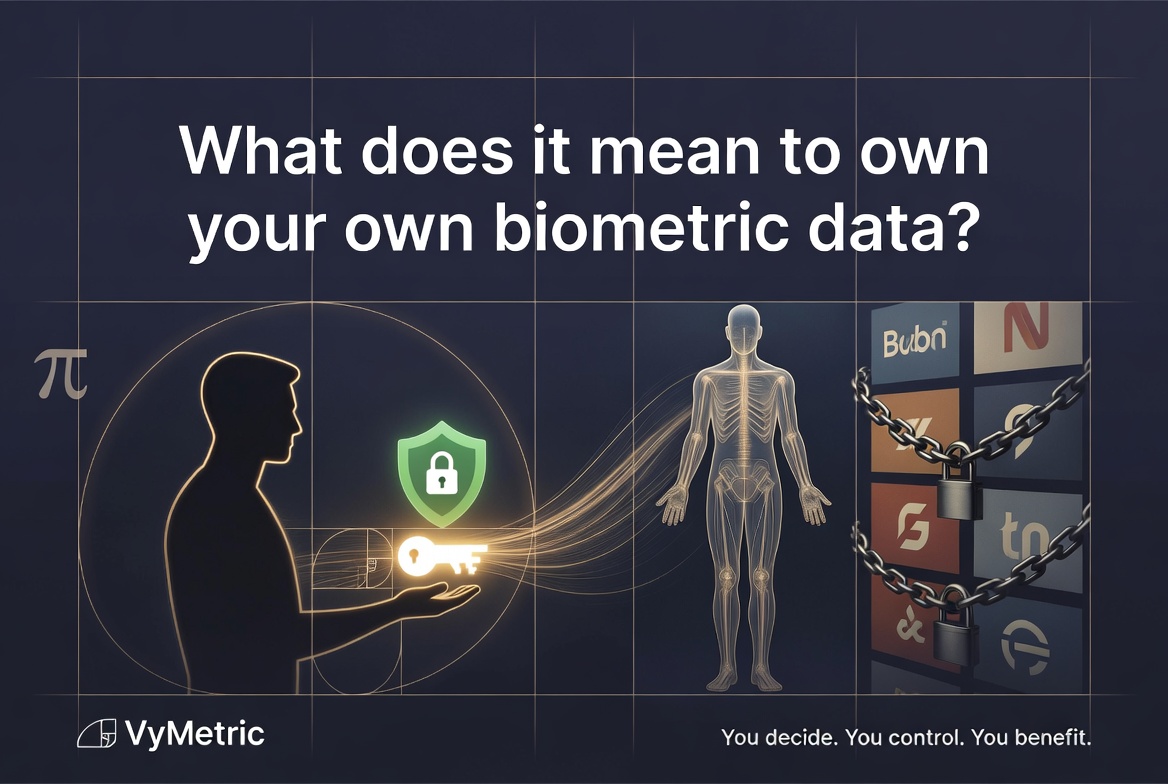
"You Own Your Data"
It has become a marketing slogan. Every app, every platform, every social network now claims that users "own their data." But what does that actually mean? For most, it means nothing. It is a checkbox on a privacy policy. A vague promise with no teeth.
Data ownership, in practice, is determined by architecture. It is not what companies say in their terms, it is what they built underneath. And almost no one has actually built for true ownership.
Until now, the conversation around ownership has been abstract. Legal. Let's make it concrete. Let's talk about your body's measurements.
The Traditional Model: Brands Own Your Fit
When you buy from a brand online, you might enter your measurements, your size, your preferences. That data lives on the brand's servers. They own it. They use it to recommend products. They use it to optimize their sizing algorithms. They sell it to marketers. They archive it (or delete it, or lose it in a breach).
You provided the data. But you don't own it. The brand does.
This creates a fragmented nightmare for you: your measurements with Brand A are inaccessible. Your fit history with Brand B doesn't talk to Brand C. Every single retailer has their own silo of your body data, and you can't move it, share it, or control how it's used across vendors.
The VyMetric Model: You Own, Brands Access
Your Biometric ID is yours. Not ours. Not the retailers'. Yours.
When you scan into a Totem, we generate 240+ measurements. That ID is stored on your device, in your control. We hold an encrypted copy that only you can unlock. When you want to shop from a brand in our network, you grant that brand permission to access your ID, nothing more.
The brand doesn't own your measurements. They don't store them. They query your ID to generate a size recommendation in real-time, then the query ends. No archive. No database. No liability if they are hacked.
You remain the sole owner of your body's data.
Why This Matters Architecturally
True ownership requires three things:
1. Portability: Your data doesn't belong to any single platform. You can move it, port it, share it with new brands whenever you want. It's not locked in a silo.
2. Control: You decide who sees what. You can revoke brand access instantly. You can see exactly when and how your data is being used. You are not trusting a privacy policy; you are seeing the access log.
3. Durability: Your data persists because it is yours, not because some company feels like keeping it. If VyMetric were to shut down tomorrow, your ID is still valid. You own the cryptographic keys.
Almost every data ownership claim fails on at least two of these. VyMetric is built from the foundation to support all three.
The Economic Shift
This architecture changes incentives entirely. Instead of brands competing to lock in your data, they compete to serve you better. Instead of you being trapped in a brand's ecosystem, you are empowered to shop anywhere.
For brands, it shifts from "own the customer's data" to "earn the customer's trust." Different business models for different companies, but the end result is alignment. Your interest and the brand's interest are no longer at odds.
Privacy Is a Feature, Not an After-Thought
In most systems, privacy is defensive. You are trying to hide from the company that owns your data. With VyMetric, privacy is foundational. It is not hiding, it is architecture. You can see the access logs. You can understand exactly what happened to your data. You can revoke permissions.
This is what ownership actually means.
The Broader Vision
Today it's biometric fit data. Tomorrow, this model could apply to health records, genetic data, or any personal information. The principle remains: you own it, institutions access it by permission only.
That's not just better for privacy. It's better for innovation. When you control your data, you can allow researchers to access it. You can grant permissions to apps that genuinely serve your interests. You are not locked in, you are empowered.
The body is the passport. We issue the ID.