The Golden Ratio is Not a Design Gimmick. It's a Measurement System
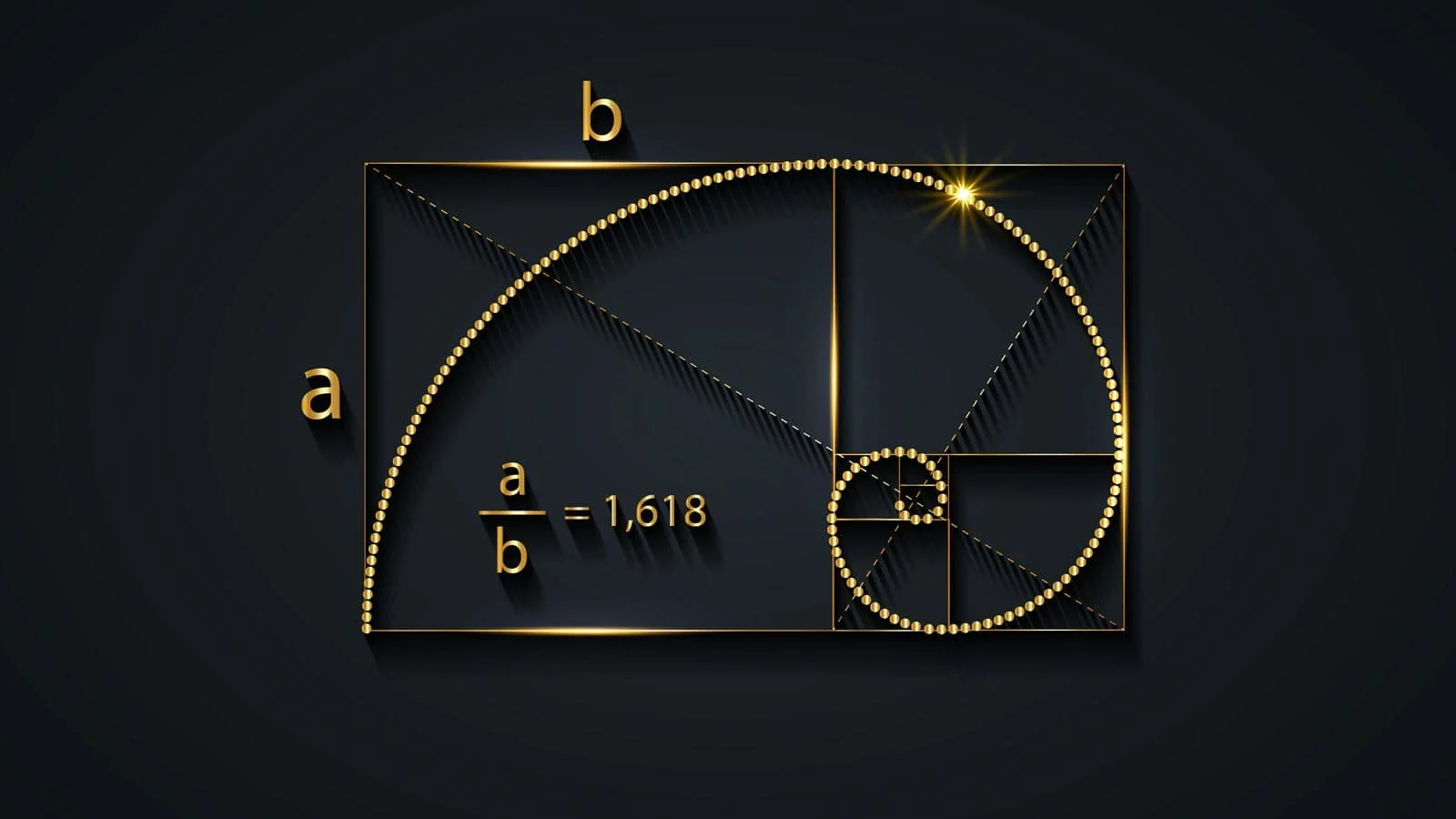
φ = 1.618 appears throughout the human body for a reason. We explain why Fibonacci proportions are the correct mathematical framework for precision fit at scale.
The Design Cliché
Designers love the golden ratio. φ = 1.618. It appears in logo design, in layout proportions, in architecture. There's a mystique to it, a sense that if something follows phi, it is inherently beautiful or harmonious.
Most of this is mythology. Designers retrofitting the golden ratio onto designs that already feel good, convincing themselves that phi caused the beauty rather than noticing it after. When the golden ratio appears in nature, people get excited. When it doesn't, they move on and forget.
But for human body fit, the golden ratio isn't a design principle. It's not decoration. It's measurement infrastructure.
The Fibonacci Sequence Lives in Your Body
The Fibonacci sequence is simple: 1, 1, 2, 3, 5, 8, 13, 21, 34, 55, 89, 144… Each number is the sum of the two before it.
The ratio between consecutive Fibonacci numbers converges to phi: 1.618. And this ratio appears everywhere in human anatomy:
Hand proportions: The ratio of your forearm to your hand is approximately phi. Your fingers follow Fibonacci spacing.
Face geometry: The distance from your chin to the bridge of your nose, relative to the distance from the bridge to your forehead, phi.
Torso and limbs: Your navel divides your body in approximately the golden ratio. Your shoulder width to waist width follows Fibonacci proportions.
Spine and ribcage: The relationship between vertebral spacing and rib placement adheres to Fibonacci sequences.
This isn't coincidence. It's structural optimization. The Fibonacci sequence represents the most efficient packing of matter in growth systems. When biology is constrained by physics and resources, Fibonacci appears.
Why This Matters for Sizing
Traditional sizing ignores this. Clothing sizes are arbitrary categories: small, medium, large. Or numeric: 32, 34, 36. These are crude buckets with no relationship to actual human proportion.
A size 34 waist with a 28 inch inseam doesn't fit like a size 34 waist with a 36 inch inseam. The proportions are completely different. The actual body shape is different. But fashion brands treat them the same because they don't have a framework for proportion-aware sizing.
Until you measure the whole body.
The VyMetric Approach: Proportional Measurement
Our 240+ measurements aren't arbitrary. They are designed around Fibonacci and proportional relationships:
Skeletal proportions: We measure limb length relative to torso. Shoulder width relative to hip width. Arm length relative to hand circumference. These ratios follow Fibonacci patterns.
Volume and circumference: We measure how measurements scale relative to each other. A person with a 36 inch chest and a 28 inch waist has different proportions than someone with a 36 inch chest and a 34 inch waist. We capture both the absolute numbers and the ratios.
Positioning: Where on your body is the fullest point? Where does the measurement change most dramatically? These spatial relationships follow Fibonacci sequences in healthy bodies.
From Measurement to Recommendation
When a garment is designed, it is designed with implicit proportions. A "fitted" shirt assumes certain ratios between shoulder, chest, and waist. A "straight cut" assumes different ones. A pair of jeans assumes specific relationships between inseam, rise, and thigh width.
Our algorithm doesn't just match your measurements to garment measurements. It matches your Fibonacci proportions to the Fibonacci proportions embedded in how the garment was cut.
This is why the recommendation is perfect. Because both your body and the clothing follow the same mathematical language.
Scaling Without Loss of Precision
Here's the magic: Fibonacci sequences scale infinitely while maintaining proportion. A small person and a large person can both follow the same proportional framework. The numbers change, but the relationships remain constant.
This is how VyMetric scales across body types, ages, and populations. We are not binning people into arbitrary size categories. We are speaking the language of their body's actual geometry, a language that's universal because it is rooted in biology, not fashion convention.
The Future of Precision Fit
Right now, fashion uses centuries-old sizing that predates any understanding of human proportion. In 50 years, the fact that we sold clothes in arbitrary sizes will seem as barbaric as bloodletting.
The future is proportional. The future is phi. The future is a system where your body's measurements, expressed in a mathematical language that biology already understands, becomes the reference point for everything you wear.
That's not design mysticism. That's measurement science.
The body is the passport. We issue the ID.